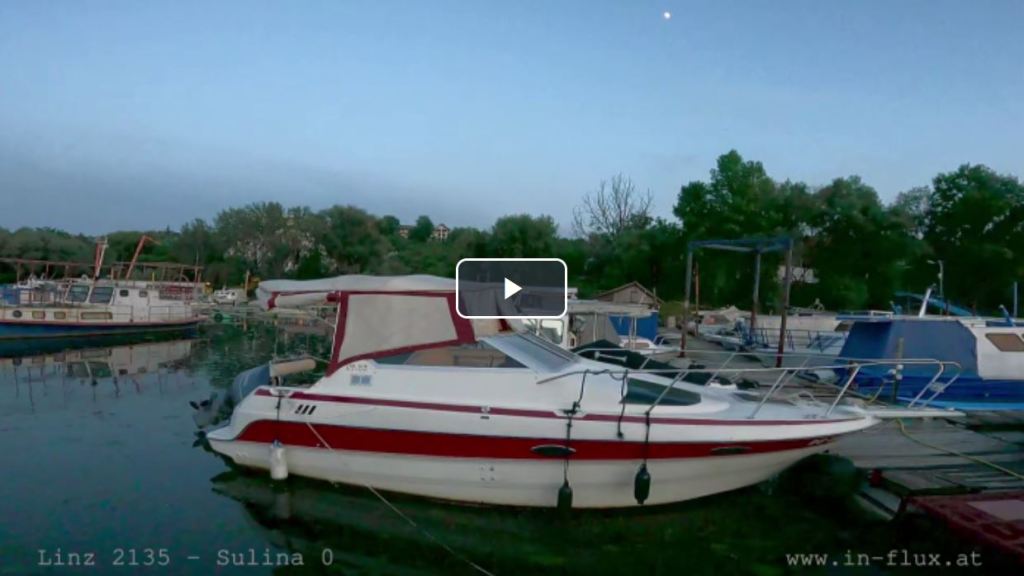
We woke up at our mooring spot—a place that had seemed quite magical when we arrived yesterday. Maybe it was the Slivovitz we were offered upon arrival, maybe the late-day light on the water. But by morning, the spell was broken. The heat shimmered, the mosquitos swarmed, and everything felt like a hot, stagnant swamp.
Old boatmen sometimes refer to still, unmoving water as dead water—and nothing could describe this place more accurately. The smell was heavy, the water didn’t move, and ideally, not even the hull of a boat should be touching it. If we hadn’t arranged a meeting here, we wouldn’t have stayed any longer.
But we were waiting for Aleksandar Popović from the Belgrade-based Serbian art collective Karkatag. We spent the morning on the ship together, had breakfast, and talked about art, the challenges artists face in Serbia, and the potential for collaboration and action.
In the afternoon, we went into town, where Aleksandar showed us a project he’s involved in: a formerly legal, now squatted cultural space called Magacin (kcmagacin.rs). We toured the site and its workshops—for printmaking, sewing, wood, steel, and more—and met local artists at work.
What many conversations with Serbian artists have in common is a sense of frustration—and a kind of hopelessness. From the outside, Serbia sometimes appears full of possibilities, because not everything is as strictly regulated as in Austria. But for many living here, it often feels like a land of impossibilities. Isolated in many ways from the rest of Europe.
Interviews will follow shorty.